Swayambhunath (Monkey Temple)
स्वयम्भूनाथ
Ancient hilltop stupa overlooking Kathmandu Valley — one of the oldest religious sites in Nepal, sacred to both Buddhists and Hindus.
Dedicated To
Adi-Buddha / Harati Devi
Period
5th century CE (legendary origins ~2000 years)
Hours
Open 24 hours
Entry Fee
NPR 200 / USD 2
Neighborhood
Swayambhu
Location
Kathmandu, Bagmati
Visiting Etiquette
Walk clockwise around the stupa. Be mindful of monkeys — do not carry food openly. Remove shoes at temple entrances.
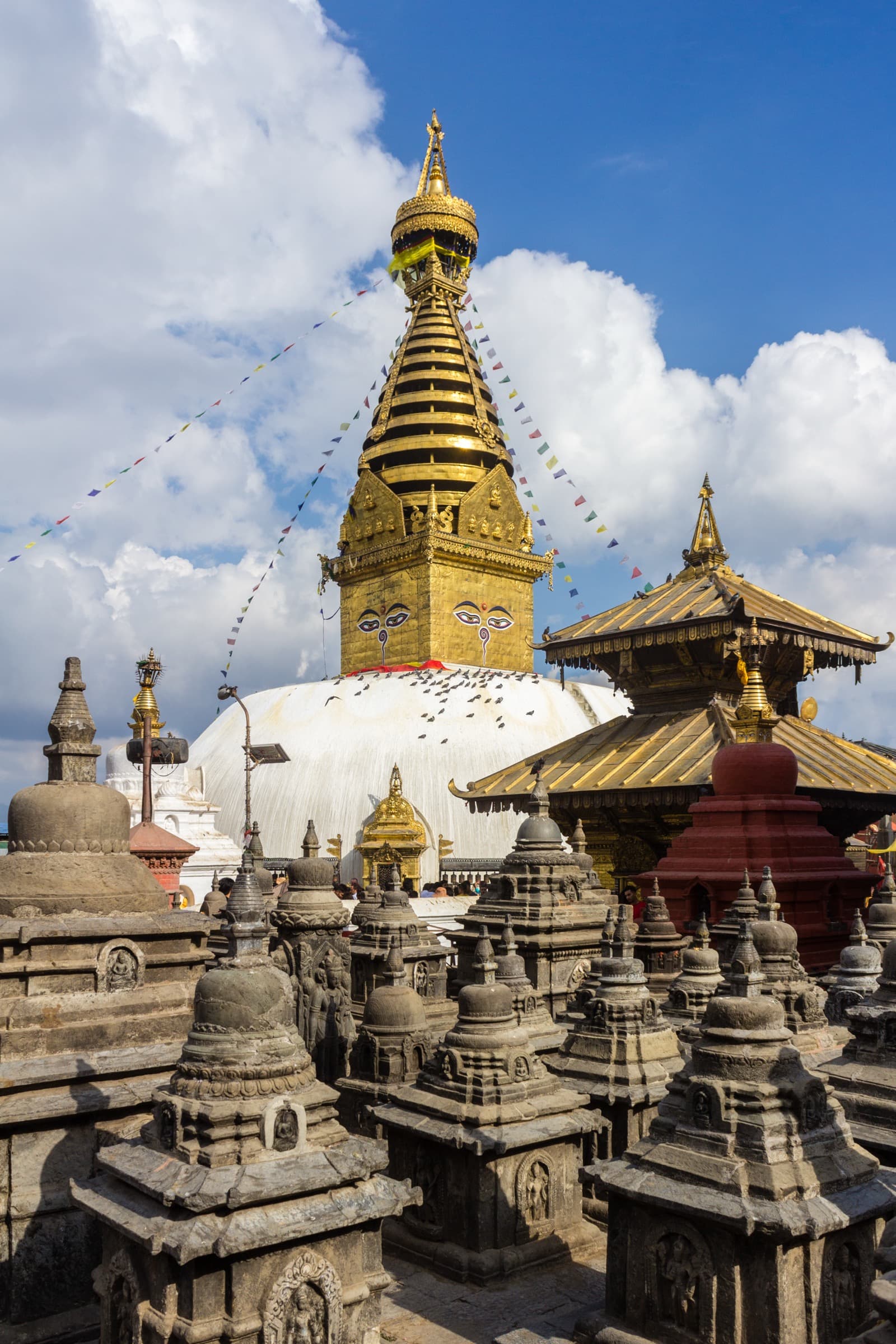
Swayambhunath, fondly called the Monkey Temple due to its resident troops of rhesus macaques, sits atop a verdant hillock west of Kathmandu. It is one of the oldest religious complexes in Nepal, with origins dating back over 2,000 years.
The self-arisen (swayambhu) flame is said to have been discovered by Manjushri, who drained the ancient lake that once filled Kathmandu Valley. The stupa's white dome and gilded spire with the all-seeing eyes of Buddha are iconic symbols of Nepal.
365 steep steps lead to the top, flanked by stone animal sculptures. The hilltop complex contains the main stupa, a Tibetan monastery, the Harati Devi temple (Hindu), numerous shrines, and a museum. The panoramic views of the entire Kathmandu Valley are stunning, especially at sunset. The site beautifully exemplifies Nepal's syncretic religious tradition, with Buddhist and Hindu elements existing side by side.