Lumbini — Birthplace of Buddha
लुम्बिनी
Birthplace of Siddhartha Gautama (Buddha), a UNESCO World Heritage Site and one of the holiest pilgrimage sites for Buddhists worldwide.
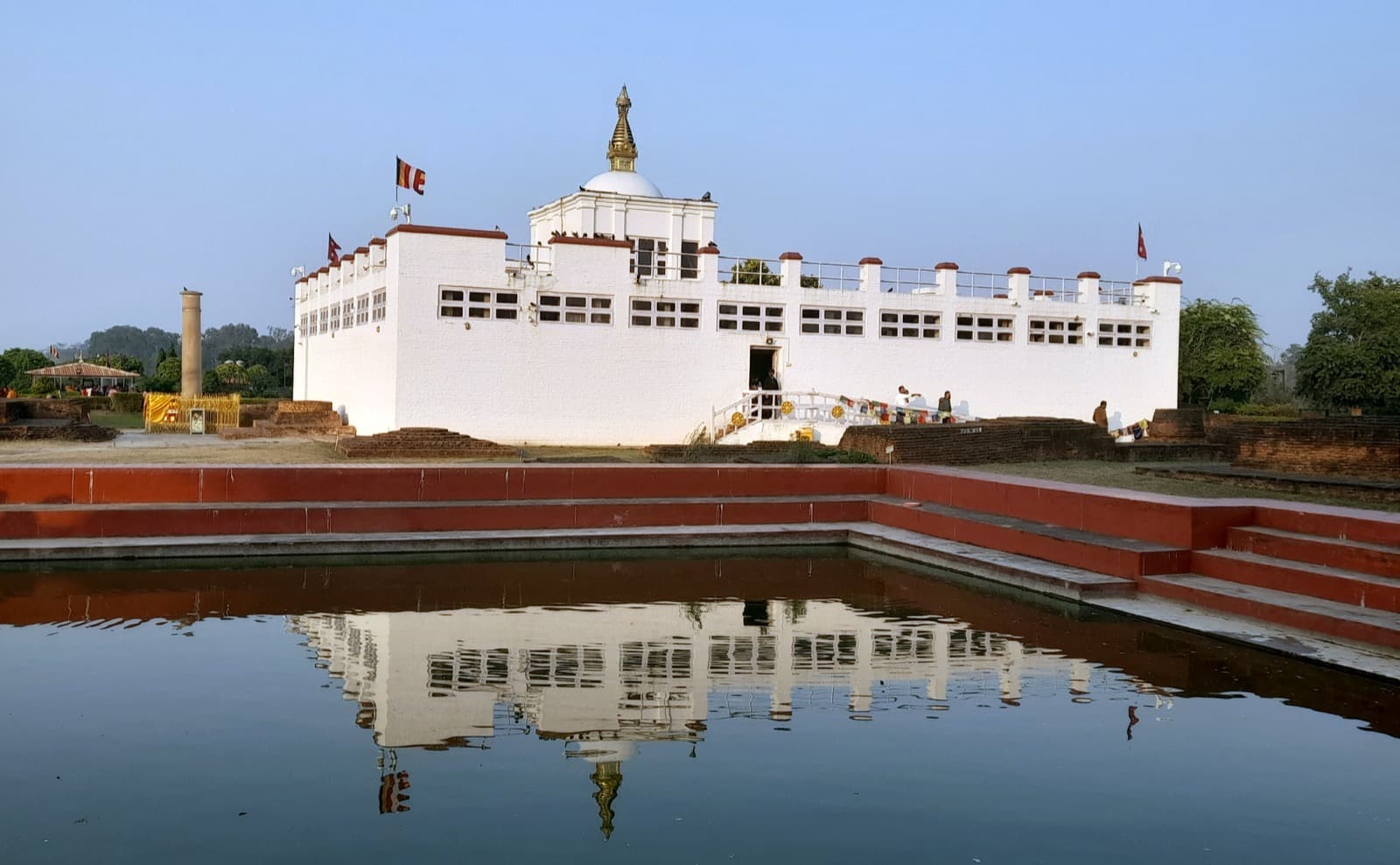
Dedicated To
Birthplace of Siddhartha Gautama (Buddha)
Period
623 BCE (Ashoka pillar 249 BCE)
Hours
6:00 AM – 6:00 PM (sacred garden), monasteries vary
Entry Fee
NPR 200 / USD 3
Neighborhood
Lumbini Development Zone
Location
Rupandehi, Lumbini
Visiting Etiquette
Maintain silence in the sacred garden. Remove shoes in temple areas. Photography allowed outside, restricted inside Mayadevi Temple. Dress modestly.
Lumbini is the birthplace of Siddhartha Gautama, who became the Buddha, and is one of the four holiest sites of Buddhism. Located in the Rupandehi district of southern Nepal, this UNESCO World Heritage Site draws pilgrims from across the world.
The sacred garden contains the Mayadevi Temple, built over the exact spot where Queen Mayadevi gave birth to Prince Siddhartha in 623 BCE. Inside, the nativity sculpture and the marker stone are among the most revered objects in Buddhism. The Ashoka Pillar, erected by Emperor Ashoka in 249 BCE, bears the earliest known inscription identifying Lumbini as the Buddha's birthplace.
The greater Lumbini development zone covers 4.8 square kilometers, designed by Japanese architect Kenzo Tange. It includes a monastic zone with monasteries built by Buddhist communities from around the world (Myanmar, Thailand, China, Korea, Germany, France, and more), the sacred garden, and the World Peace Pagoda. The eternal flame, lit in 1986, burns continuously as a symbol of world peace.